
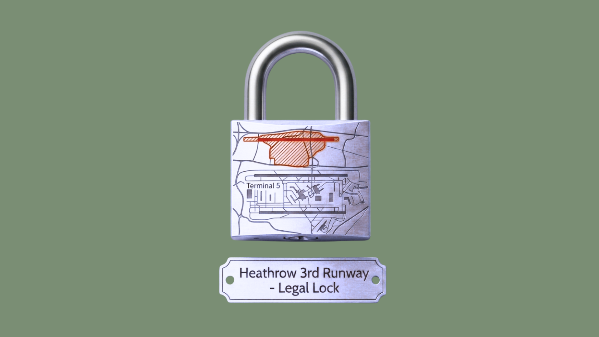
The government has backed plans for Heathrow's third runway. But this is not just about adding more flights. It is about whether the UK can grow its economy while sticking to its legal climate commitments, and it will keep planning, environmental and commercial lawyers busy for years.
Why Is Heathrow Expansion Back on the Agenda?
Heathrow is the UK's busiest airport and is operating close to full capacity. Business groups have pushed for a third runway for years, arguing that it could bring more trade, investment and thousands of jobs.
The government agrees. Ministers see major infrastructure projects like Heathrow as essential to boosting economic growth and believe that without expansion, airlines, passengers and investment could move to competing European airports such as Paris Charles de Gaulle and Amsterdam Schiphol.
Why Is It So Controversial?
Not everyone supports the plans.
Environmental groups argue that a larger airport could mean more noise, increased emissions and poorer air quality for surrounding communities. They also question whether Heathrow's expansion can fit alongside the UK's legal commitment to reach net zero emissions by 2050.
The government argues that cleaner aircraft technology, sustainable aviation fuel and other carbon reduction measures can help address these concerns. Critics remain unconvinced, arguing that technological progress alone may not offset the environmental impact of a bigger airport.
How Do Lawyers Get Involved?
This is where it gets interesting for aspiring lawyers.
A project of this scale brings together several legal teams:
- Planning lawyers handle issues such as development consent, land acquisition and public objections.
- Environmental lawyers advise on climate obligations, biodiversity rules and environmental impact assessments.
- Construction and commercial lawyers negotiate contracts covering funding, procurement and infrastructure deals worth billions.
- Public law teams may become involved if the government's decision faces a legal challenge through judicial review.
For aspiring lawyers, Heathrow is commercial awareness in action: one major business decision involving multiple legal teams, competing interests and complex regulation.
What Happens Next?
Even though the government has confirmed its support for Heathrow’s expansion, significant barriers remain. The project may be delayed for several years due to planning approval, environmental assessments, and potential legal difficulties.
If the third runway is developed, it will be one of the largest infrastructure projects in the UK, with the potential to transform the aviation sector for decades. However, ministers' ability to balance environmental responsibility and economic growth will ultimately determine its success. Thus, the Heathrow dispute extends beyond aviation. It illustrates a bigger challenge for the UK: can the government finish major infrastructure projects while remaining committed to its climate goals?