
Introduction
Sumitomo’s move into Gwynt Glas is often described as a simple stake purchase, but that understates what happened. On 10 August 2026, Sumitomo became an equal partner alongside existing developers EDF Power Solutions UK & Ireland and ESB, with all three now holding 33.33%. Pinsent Masons’ Glasgow energy team, acting for EDF and ESB, restructured a two‑party development into a three‑way joint venture on an asset still years away from producing power.
Why Floating Wind’s Legal Rights Are Still So New
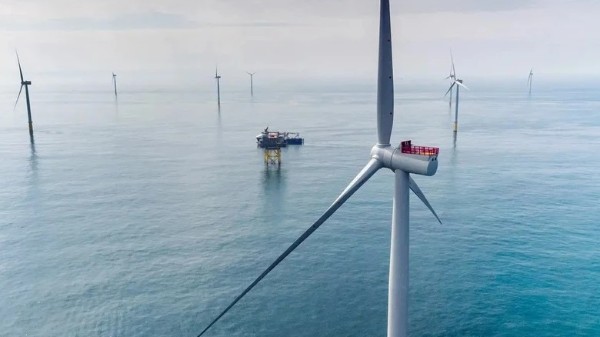
Floating turbines do not remain fixed to a single seabed point. Their mooring lines anchor them across a wide area of seabed and water column, shifting with tides and currents. Regulators therefore cannot grant rights in the same way they do for fixed‑bottom turbines.
This explains why Gwynt Glas has taken since 2021 to reach only an Agreement for Lease with The Crown Estate, signed on 7 October 2025. It forms part of the Celtic Sea leasing round targeting 4.5GW by 2035 and a further 12GW by 2045. An Agreement for Lease sits far short of a full lease or planning consent, highlighting how early‑stage the legal framework for floating wind still is.
How an Equal Three‑Way Joint Venture Actually Works
Sumitomo’s announcement confirms the 33.33% split and something more striking: the consent application will not begin until 2028, and commercial operation is not expected until the late 2030s. Sumitomo has invested into a project that is more than a decade away from generating anything.
An equal joint venture also creates governance challenges that fixed‑bottom deals rarely face. With no majority shareholder, a three‑way structure can create deadlock, and there is no built‑in mechanism to resolve it without negotiated governance provisions.
Crossing Jurisdictions and Owners
ESB appears to be a standard Irish utility until you look closer: the Irish Government owns 97.7% of it. EDF Power Solutions UK & Ireland sits within EDF’s UK renewables arm, which is targeting 10GW by 2035. Sumitomo’s involvement links back to a 2025 memorandum of understanding with the UK’s Office for Investment, which identifies this deal as a direct outcome.
Pinsent Masons' Glasgow team acted for the sellers (EDF and ESB) while Watson Farley & Williams' London energy team acted for Sumitomo, supported by tax and competition specialists.
Impact on Law Firms
Pinsent Masons (Glasgow):
- Led the restructuring for EDF and ESB, converting the existing development into the new equal joint venture
Watson Farley & Williams' (London):
- The energy team handled advisory for Sumitomo on structuring its 33.33% acquisition.
- A WFW's tax partner addressed cross-border tax issues arising from a Japanese investor acquiring UK energy infrastructure.
- A WFW competition partner assessed the merger-control exposure even though no filing has been made public.
None of this touches Gwynt Glas's own planning work, which runs separately and produced its own scoping report in June 2026.
What Happens Next
That scoping report means the environmental assessment is underway, but the full consent application is not expected until 2028, and commercial operation remains scheduled for the late 2030s. With another 12GW of Celtic Sea capacity still to be allocated by 2045, this equal three-way structure may shape how future investors choose to enter the market.