
Introduction
France has introduced new measures targeting ultra-fast-fashion businesses, with the latest financial penalties taking effect on 1 September 2026. The measures are designed to address the environmental and social impact of ultra-fast fashion and the rapid growth of online platforms selling very cheap clothing. However, the law has also created an international trade dispute, with China accusing France of discrimination against Chinese businesses including Shein, Temu and AliExpress.
What Has France Introduced?
France’s July 2026 law creates a framework specifically addressing what it calls “ultra-express fashion”. It covers businesses whose practices involve large numbers of new product references and limited incentives for repair and reuse. Online platforms can also fall within the regime where they facilitate the sale or delivery of qualifying products.
From 1 September 2026, qualifying products became subject to a financial malus. In 2026, the charge can reach 50% of a product’s price, with the maximum scheduled to increase to €19.50 by 2030. The measure is intended to make the environmental cost of ultra-fast fashion more visible and reduce the competitive advantage created by extremely low prices.
Why Are Shein and Temu at the Centre of the Dispute?
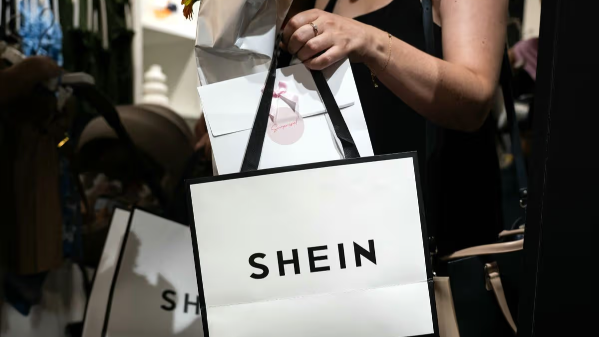
Although the legislation is framed around business practices rather than nationality, its practical impact has fallen heavily on Chinese-founded platforms. French officials have identified Shein and Temu as major examples of the ultra-fast-fashion model. At the same time, reporting has indicated that traditional European retailers such as H&M and Zara are not expected to face the same levy under the current approach.
China has strongly objected. Its Ministry of Commerce has described the measure as discriminatory and argued that it may conflict with the WTO’s non-discrimination principle. China has called for the law to be withdrawn and warned that it could take measures to protect Chinese businesses.
The more difficult legal question is whether a measure that is formally based on environmental and commercial criteria can still amount to discriminatory treatment if, in practice, it places a significantly greater burden on foreign platforms.
Impact on Customers and Competitors
Customers could face higher prices if retailers like Shein and Temu pass extra costs on to shoppers. If their products face additional charges, they could lose some of their price advantage over traditional retailers not impacted by the levy. Alternatively, businesses might absorb part of the charge, reducing their profits.
Competitors may try to incentivise their customers to repair or reuse their items in hopes of not being affected by the new levy. If France's decision is not reversed, reduced variety of clothing and/or increased prices on platforms like Shein could drive customers towards unaffected competitors.
Impact on Law Firms
The measure creates work across several practice areas. Competition lawyers may consider whether the rules distort competition between online platforms and established retailers, while international trade lawyers will assess potential WTO and EU-law issues. Commercial and regulatory lawyers will also advise platforms and fashion businesses on compliance, product pricing and advertising restrictions.
For Chinese platforms operating in Europe, the financial impact could also influence pricing, supply chains and the structure of their marketplace models.
Future Outlook
France’s approach could become a wider test of how far governments can regulate international online businesses through environmental rules without creating discriminatory trade barriers. The immediate issue is whether the French measure remains focused on the ultra-fast-fashion model or develops into a broader dispute over the treatment of Chinese e-commerce businesses in Europe.
With China already challenging the measure publicly, the dispute could develop beyond fashion and become a wider example of the tension between environmental regulation, competition and international trade law.