
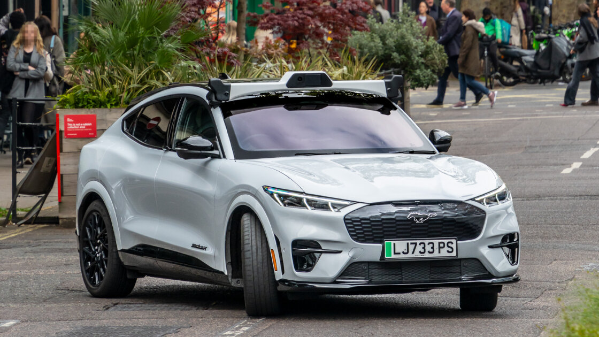
Your next Uber driver might not be a driver.
Uber is putting autonomous cars on London's roads. The technology works. The harder question is what happens when it doesn't
Liability
Under the Automated Vehicles Act 2024, liability shifts away from the passenger to the authorised self-driving entity (ASDE). This is the organisation legally responsible for the vehicle's self-driving system. Uber's current London rollout, however, is still a supervised trial, with a trained, TfL-licensed driver in the car.
Uber's current setup already involves several businesses. Ford supplies the Mustang Mach-E vehicles, Wayve provides the autonomous driving technology, and Uber provides the ride-hailing platform.
Once the safety driver is removed and the full ASDE regime applies, questions become more complicated. If an accident results from a software update, a faulty sensor or an interaction between systems, where should the risk fall? And how should insurers price that risk when responsibility is spread across a wider supply chain?
Safety assurance
The Act requires government authorisation before self-driving vehicles can operate under the full regulatory regime, and companies must demonstrate that their systems meet the UK's safety requirements. But proving a system is safe before deployment is only part of the challenge.
Autonomous vehicles are trained and tested using large amounts of data, but no testing programme can recreate every situation a vehicle may encounter on London's roads. Real-world operation provides further evidence of how the system performs in changing traffic, weather and road conditions. This makes ongoing monitoring important. Regulators will need to assess evidence from companies such as Wayve and determine whether the technology continues to meet the required safety standard as it develops.
Data Protection and Privacy Concerns
Driverless taxis rely on cameras, sensors and location data to understand their surroundings, which can involve processing information about passengers and other road users. The UK GDPR applies, but the challenge lies in how existing data protection rules apply in an autonomous vehicle context. In particular, how much data is necessary to operate the vehicle safely, and how much can be retained or reused?
It is also unclear how firms should handle data collected during journeys if they want to use it for training or system development. The distinction between data needed to operate the vehicle and data used for wider purposes becomes important.
Law enforcement access adds another element of uncertainty. AVs could capture useful evidence of accidents or crimes, raising questions about when authorities can access that data and what safeguards should apply. As fleets develop, these questions will become increasingly important.
Future Outlook
Overall, Uber's autonomous taxi rollout occurs within an existing legal framework that is still developing. Although liability regulations exist, their application becomes more complex when different businesses contribute to the vehicle and its technology. Safety assurance and data protection frameworks are in place, but their application to autonomous vehicles raises new practical questions. The rollout will not only test new technology, but also the UK's capacity to regulate it as it becomes part of everyday transport.