
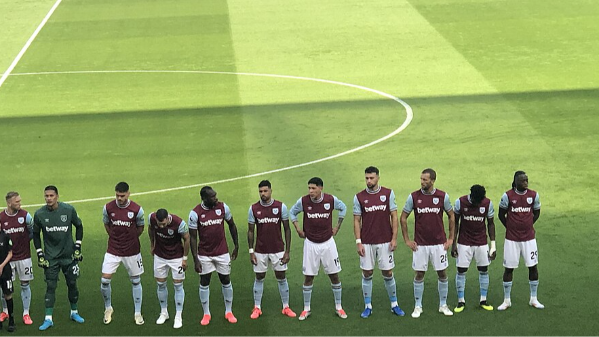
Football clubs are increasingly attracting the attention of wealthy investors, with ownership stakes offering significant commercial opportunities and the potential to influence the direction of a club. However, acquiring a substantial financial interest does not necessarily guarantee complete control over how a football club is managed. Consider the case of West Ham United, where Daniel Křetinsky’s investment firm, 1890s Holdings, has sought to increase its shareholding and strengthen its position within the club.
How Much Power do Shareholders Have?
According to Section 282 of the Companies Act 2006, an ordinary resolution typically satisfies, needing only a simple majority of the votes that are cast. Ordinary resolutions are used for routine corporate actions (e.g. appointing directors) However, Section 283 specifies that a special resolution requires a 75% majority. Special resolutions involve fundamental changes to a company's constitution, structure, or legal status.
A 46% voting share investor, for instance, would have considerable sway but still be unable to force through ordinary resolutions. On the contrary, if all shareholders voted for a special resolution and the remaining 54% voted for it, the same investor would block it.
In addition, according to the Companies Act 2006’s 172nd section, directors are required to promote the company’s development for the benefit of all of its members, not just its largest shareholder. This implies that voting influence is not the sole consideration in whether a resolution is passed.
Why Shareholder Rights Matter
The ownership dispute at West Ham shows how shareholder protections can influence the result of a transaction worth several million pounds. In June 2026, Daniel Křetinsky’s 1890s Holdings agreed to increase its shareholding to about 43 per cent, on the condition that the pre-emption rights were respected and the necessary regulatory approvals were obtained. The Gold family’s agreement with Amanda Staveley’s alliance prompted the existing shareholders to exercise their right of first refusal. Unlike the statutory pre-emption rights in section 561 of the Companies Act 2006, which usually protect shareholders against dilution when new equity securities are issued for cash, limitations on the transfer of existing shares arise from contractual or constitutional arrangements.
The fact has important commercial implications. It is possible for an outside investor to negotiate a purchase price without in the end obtaining the shares. In September, the current shareholders arrived at an agreement by which Křetínský’s shareholding would be increased to about 46%, thus excluding Staveley’s alliance.
Is Football Turning into an Investment Business?
Football clubs are now becoming more and more appealing as commercial investments, earning income from broadcasting rights, sponsorship deals, merchandise sales and international collaborations. Yet their value cannot be judged just by reference to financial returns, as shown by West Ham United’s participation in the Premier League’s More Than A Game programme, which shows the sport’s broader contribution to local communities and to the development of grassroots football.