
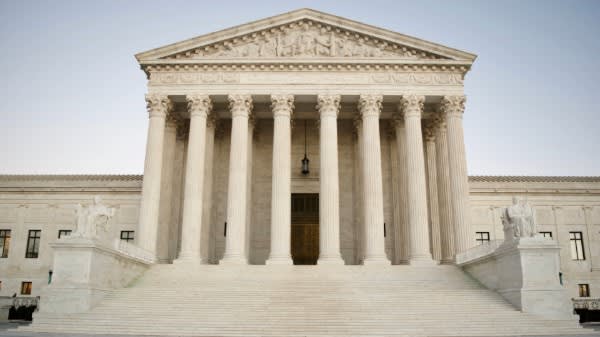
The US Supreme Court ruled that the president cannot use an emergency law to impose tariffs. This decision restricts presidents from relying on the International Emergency Economic Powers Act (IEEPA), a law often applied during national emergencies.
Over the last few decades, successive presidents have exercised broad economic powers to control trade policy. But the Supreme Court now clarifies that these emergency powers do not extend to tariffs. This ruling is significant because it could change how future trade disputes unfold and deliver greater legal certainty to global commerce.
The Legal Framework: Emergency Powers and Trade
IEEPA empowers the sitting US president to regulate economic activity during national emergencies and has enabled asset freezes, sanctions, and trade restrictions with foreign countries.
Separate trade legislation traditionally governs tariffs. These laws require specific procedures and usually involve the president discussing actions with Congress or other trade agencies.
The Court’s ruling confirms that emergency economic powers do not cover tariffs. Simply put, the president cannot bypass established trade laws by declaring an emergency.
This reinforces the constitutional balance between Congress and the executive branch. Under the US Constitution, Congress holds the power to regulate international trade. The president can act in certain circumstances, but those powers must be supported by clear statutory authority.
The Business Case: Why Tariff Powers Matter
When tariffs are suddenly introduced, businesses face immediate cost increases and uncertainty. They affect companies that import goods, rely on foreign suppliers or operate global supply chains.
Retailers may raise prices, and manufacturers may have to change suppliers. Shipping contracts and long-term commercial deals can also become unprofitable overnight.
For this reason, businesses prefer to operate in countries with predictable trade rules. If tariffs require clearer legal authority and procedural safeguards, companies gain more stability when planning investments and supply chains.
This ruling may additionally influence how governments approach trade disagreements. Instead of relying on emergency powers, policymakers will need to apply formal trade tools or negotiate agreements.
Legal Team Involvement
Several legal teams handle tariff policy changes.
- Trade and regulatory lawyers advise businesses on tariff exposure, customs compliance and import regulations. They help businesses understand how new duties change pricing and supply chains.
- Commercial lawyers review contracts with suppliers and distributors. If new tariffs increase costs, they may renegotiate terms or rely on clauses that allocate risk between parties.
- Competition lawyers monitor how tariffs affect markets. Sudden trade restrictions can shift market power, change pricing structures and influence competition between domestic and foreign producers.
- Dispute resolution teams may also become involved if businesses challenge tariffs in court or arbitration.
The Future Outlook
The decision signals that courts are willing to scrutinise the use of emergency economic powers. Future administrations may face tighter legal limits when trying to impose trade restrictions quickly.
Congress could respond by clarifying its tariff powers or by passing new legislation that allows for faster action in economic crises. Alternatively, governments could depend more on targeted sanctions than on broad tariffs.
The main lesson for businesses is that legal interpretation now plays a crucial role in creating trade policy. This Supreme Court decision could affect investment, supply chain planning, and responses to future trade rules as courts redefine commercial boundaries.
As international trade becomes more politically sensitive, courts are increasingly asked to define the limits of economic power. That means the rules governing international commerce will continue to evolve in both courtrooms and markets.