
Introduction
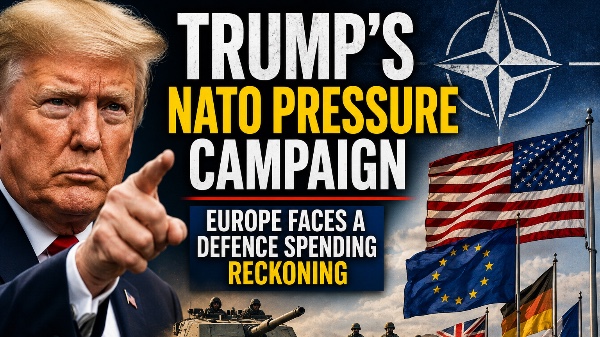
Donald Trump's renewed emphasis on NATO countries increasing defence spending has revived a long-running political battle over burden-sharing inside the alliance. His most recent remarks, which hinted that the US might not always stand up for members who do not meet spending targets, have sparked concern throughout Europe.
This is more than just a dispute on foreign policy. This commercial and political problem has a huge impact on government spending, defence procurement, and the overall security industry.
The Breakdown
Why Is NATO Spending Back in Focus?
Trump has frequently complained that NATO members in Europe rely too heavily on US military help while making minimal contributions to collective defence. Despite the fact that NATO members committed to a defence spending target of 2% of GDP, a number of countries have historically fallen short.
Many governments upped their defence budgets in response to Russia's invasion of Ukraine, but long-term commitments continue to cause concern. The problem has resurfaced as a result of Trump's latest action, particularly given the rising ambiguity surrounding future US foreign policy.
European countries are currently under pressure from both domestic security concerns and Washington.
The Political Stakes
Spending on defence is politically sensitive. Budget increases for the military frequently require difficult trade-offs with civilian spending priorities such as infrastructure, healthcare, and education.
Meanwhile, political leaders may suddenly accept that higher defence spending is unavoidable. If trust in US military promises dwindles, European states may increase their efforts to acquire greater strategic autonomy.
The reasoning also takes into account broader geopolitical changes. NATO has always relied on strong American leadership, but European capitals are being pushed to reconsider that paradigm due to Washington's political instability.
The Commercial Impact
Increased defence investment will tremendously help cybersecurity companies, aerospace manufacturers, and defence contractors alike. Increased procurement spending could benefit enterprises that provide military gear, surveillance systems, and logistics infrastructure.
If governments prioritise regional manufacturing capabilities above reliance on US suppliers, European defence groups will be particularly well placed.
Rapid increase in procurement may also raise regulatory, public procurement, and competition law concerns for governments monitoring large-scale contracts.
How Legal Teams Get Involved
This level of defensive investment would necessitate multiple legal professions. Governments would get guidance on tender procedures and compliance requirements from public procurement solicitors. If suppliers seek to form partnerships or mergers, competition lawyers may consider defence industry consolidation.
Regulatory bodies would look at cross-border defence agreements, export limits, and sanctions compliance. Commercial lawyers would negotiate major supplier contracts, while dispute resolution teams would address procurement difficulties or contract disputes.
Future Outlook
As NATO members respond to increased geopolitical unpredictability, defence spending is likely to remain a major political problem. Expectations for alliance contributions are shifting as a result of the discussion that Trump has reignited, regardless of whether he wins reelection.
The question for Europe now is not whether or whether defence spending should increase, but rather how quickly and at what political cost governments can act.
The lesson is as clear for corporations. Political unpredictability drives commercial opportunity, and the defence industry has the potential to become one of the most strategically significant businesses in the coming years.