
Introduction:
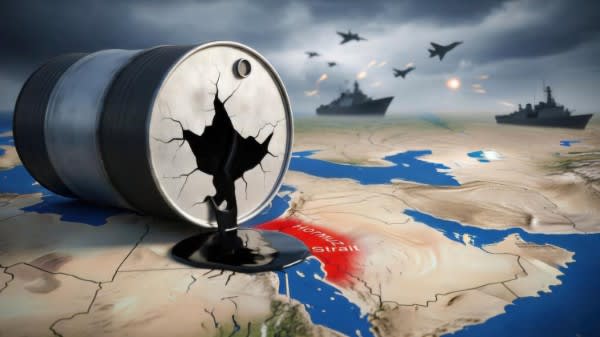
Following President Donald Trump’s approval on February 27th, 2026 (Tuesday afternoon), the U.S. and Israel began Operation Epic Fury. With a pre-emptive strike consisting of missiles, drones and fighter jets, the two nations struck Iran on Wednesday, February 28th, at 9:45 am EST or 2:45 pm GMT. Shortly before midnight, Ali Khamenei, Iran’s Supreme Leader, the ‘Ayatollah’ was confirmed dead, triggering a response from the Islamic Republic of Iran, leading to a closure of the Strait of Hormuz.
Importance:
As we are approaching 3 weeks of conflict in the region, it is important to analyse the economic and legal implications. On November 3rd, 2025, my colleague Saurabh Goel published an excellent article on the potential ‘Economic Impact of Closing the Strait of Hormuz’. Unfortunately, this scenario has become a reality.
Economic impact:
The passage concerns the Strait of Hormuz, the world’s most critical energy chokepoint, accounting for 20% of annual global oil consumption -approximately 21 million barrels per day- generating an estimated £447 billion in yearly revenue, according to the U.S. Energy Information Administration (EIA). Any prolonged partial or complete closure would severely disrupt international markets. Immediate effects are already being felt by regional exporters, including Saudi Arabia, Iraq, Kuwait, and the UAE. However, given the world’s continued reliance on petroleum, the broader consequences are global.
Asia, despite hosting major producers, remains highly vulnerable. Energy-importing economies such as China, India, Japan, and South Korea would face significant disruption to manufacturing and logistics, particularly if oil prices exceed $100 per barrel, compounding pressure on the global economy.
According to Lloyd’s List Intelligence (March 6th), at least 620 commercial vessels were trapped in the Persian Gulf: 249 bulk carriers, 195 tankers, 98 containerships, 47 LPG carriers, 16 vehicle carriers, and 15 LNG carriers. As of March 13th, 71% of transits were eastbound. Of 77 recorded transits, 26% were Iranian, 13% Greek, and only 10% were ships from China. Chinese state-owned firms have paused operations pending Beijing’s position, disrupting technology, petrochemical and freight markets, while war risk premiums and contractual liabilities rise. Meanwhile, over 40 vessels have disabled AIS systems, with operators prioritising contractual obligations over navigational risk.
Legal impact of a partial or complete closure:
- Instead of violating UNCLOS 1994 Part III through a blockade, Iran could de facto close the Strait by making it unsafe, causing higher premiums or refused insurance.
- Force majeure suspends obligations, while frustration arises when performance becomes impossible.
- ‘Safe port’ clauses allow owners to reject unsafe ports under time charters or proceed to the nearest safe port under voyage charters.
- Owners may invoke BIMCO CONWARTIME and VOYWAR 2025 clauses to refuse risky orders, provided they reasonably secure competitive insurance.
- Delays caused by military, naval, or insurance restrictions may trigger off-hire or laytime/demurrage clauses, depending on the contractual risk allocation.
Future Outlook:
To avoid a global oil crisis, the U.S. has waived the oil embargo on Russia for 30 days. It remains to be seen if such action will provide long-term stability for the international community. Should Iran’s proxies like the Houthis and Hezbollah, strike the Bab-el-Mandeb, trade rerouting from Suez will inflate shipping and oil costs, risking a severe global economic shock surpassing the 2008 financial crisis.