
Introduction
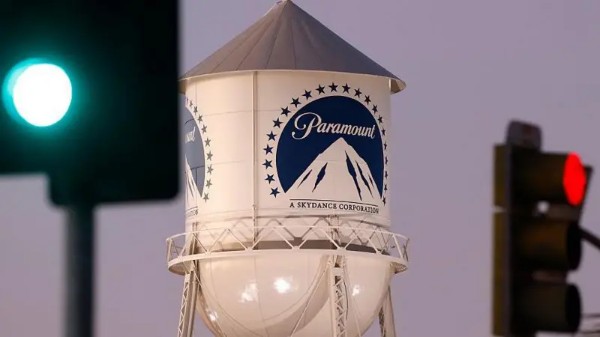
The UK's competition regulator has just cleared one of the largest media mergers in history. On the 6th August 2026, the Competition and Markets Authority (CMA) announced it had cleared Paramount Skydance's acquisition of Warner Bros. Discovery, the owner of CNN and HBO Max.
A Phase 1 inquiry is the CMA's initial review of a merger, deciding whether concerns are serious enough to warrant a deeper Phase 2 investigation. This deal cleared without a Phase 2 investigation. Now the issue arises once lawmakers and rival businesses have their say too.
What Did the CMA Decide?
The CMA opened its case in April 2026 and launched a Phase 1 enquiry in June, investigating three markets: theatrical distribution, linear cable and children's programming, and streaming video-on-demand. They concluded the combined group would still face real competition from Disney, Universal, Netflix and Amazon.
There is a distinctly UK regulatory twist. Because the deal touches news and children's programming, the Culture Secretary said on 30 June 2026 she was "minded to" intervene on public interest grounds. By 6 August she decided not to, instead accepting binding undertakings: Channel 5 News stays independent of CBS News and CNN, and Nickelodeon and Cartoon Network keep editorial independence and UK commissioning, most running five years (to 2034 for Channel 5). A separate Foreign State Influence review found no concerns.
Why Does This Matter?
Gulf sovereign wealth funds from Saudi Arabia, Qatar and Abu Dhabi are helping bankroll the deal and will reportedly own around 38.5% of the combined company, alongside the Ellison family's Skydance vehicle. That scale of foreign, politically-connected ownership over major US news outlets is what concerns the UK's media plurality regime, though in this case its more focused on editorial independence and children's content.
Writers are affected too. The Writers Guild of America (WGA) is separately suing separately to block the deal, arguing that the combined studio would become the largest buyer of film and television programming in the US, giving it both the incentive and the ability to suppress wages and cut jobs.
Impact on Law Firms
Paramount is advised by Latham & Watkins and Cravath, Swaine & Moore; Warner Bros. Discovery by Wachtell, Lipton, Rosen & Katz and Debevoise & Plimpton. A deal this size involves multiple practice areas and teams:
- Corporate/M&A: structuring the transaction and running due diligence across two global media groups.
- Competition/Antitrust: advising on the CMA's Phase 1 review and underlying market analysis.
- Regulatory: handling the DCMS public interest process and the resulting media plurality covenant.
- Finance/Banking: advising lenders on the $15bn leveraged loan backing the deal, the largest since the 2008 financial crisis.
- Litigation: managing the ongoing US antitrust trial brought by state attorneys general and the WGA.
What Happens Next?
Twelve state attorneys general, led by California, and the WGA are suing to block the deal, with trial set for March 2027 in California's Northern District, which means the deal cannot close before June 2027.
Industry responses are already incoming. Comcast is spinning off NBCUniversal partly to compete more credibly against the newly enlarged Paramount-Warner Bros. Discovery, and analysts now view the independent NBCUniversal as a plausible acquisition target, with Netflix and Apple named as possible buyers.