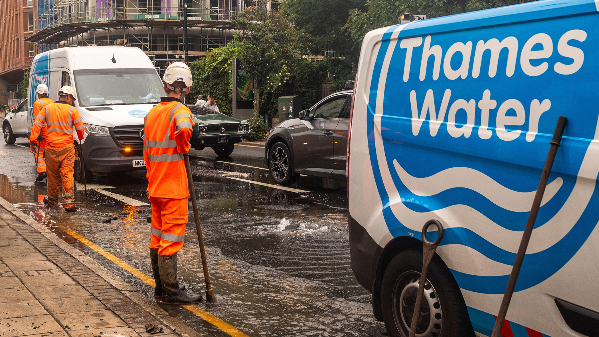
Thames Water, the UK's largest water and sewerage company, is expected to incur close to £2 billion in financing costs (largely its borrowing costs) and professional fees in the 18 months from April 2025 to September 2026. The Labour government must now choose whether to let its lenders fund a rescue or ask a court to put it into a special rescue process designed for utilities. Both routes are expensive. The question is which costs less, and who ultimately pays.
Where the Money Has Gone
Around £1.6 billion covers financing costs across those 18 months, part reported and part forecast. The £235 million spent on lawyers, bankers and advisers is reported for the year to March, with £100 million more projected to September.
Thames Water has increasingly come under the influence of its creditors (the lenders it owes money to) since its owners refused to put in more capital in 2024. Eliott Management and Silver Point are among the firms central to negotiations.
These costs matter for what they do to the company's capacity to invest. Money going to interest and restructuring cannot fund upgrades to pipes and treatment works. Thames Water's answer is that investors, not customers, bear the restructuring costs.
What Special Administration Actually Involves
Under the Water Industry Act 1991, the High Court appoints an administrator (an independent specialist in running failing companies). Their job is to keep water and sewage services running and prepare the company for sale or transfer. Ownership does not pass to the government, despite the word ''nationalisation'' that dominates the political debate.
The process can also stop lenders demanding repayment or seizing assets while the administrator works. That eases the pressure, but does not free up money for infrastructure.
The environment secretary has said Thames Water is not yet ''technically insolvent'' - it can still pay its bills as they fall due. But insolvency is not the only way in. The Act also allows the government to intervene where a water company has seriously breached, or is likely to breach, its legal duties in supplying water.
Impact on Law Firms
- Restructuring and Insolvency: the company and its lenders each need advisers to argue over who absorbs losses and who puts in new money, then draft the rescue documents and take them through court.
- Regulatory: Ofwat has to be satisfied a deal works for customers. Lawyers prepare the submissions and answer its questions.
- Public Law: ministers need advice on whether they can lawfully intervene, and on building a decision that survives challenge in court.
- Corporate: if lenders exchange debt for shares, lawyers handle the transfers, the new governance arrangements and any later sale.
- Litigation: rescue plans get fought over. When the High Court approved Thames Water's 2025 plan, junior lenders challenged it as unfair to them, while an MP objected on public-interest grounds. The Court of Appeal upheld it.
Future Outlook
The lenders argue they can put substantial new money in. So the real question is not private money against public money, but which route puts the company on a stable footing at the lowest cost and risk to consumers and taxpayers. The outcome will also shape what other indebted utilities pay to borrow.