
Introduction
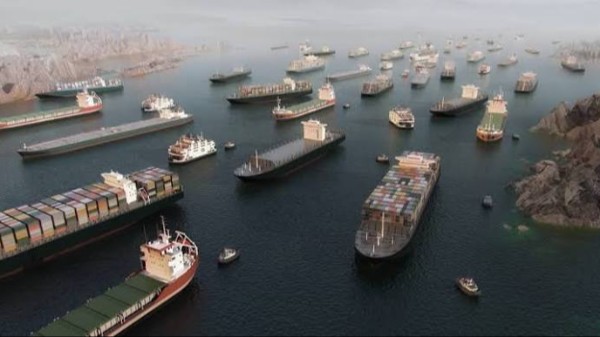
Since strikes hit Iran on 28 February 2026, the Strait of Hormuz (the 18-mile chokepoint carrying an estimated 38% of the world's seaborne crude oil and 19% of its LNG) has seen daily transits collapse from over 100 vessels to around five, after Iran's Revolutionary Guard announced the strait's closure on 2 March. With no ceasefire in sight, this is a problem most commercial lawyers have never faced: contracts and policies written for isolated incidents colliding with a war with no fixed end point.
Why War Risk Insurance Stopped Working
War risk cover is built to price a bounded risk: a defined zone, a limited voyage, a probability underwriters can model. This war doesn't fit that model as there is no end date and live minefields remain, so the odds of loss can't be calculated as they would for a contained incident. Insurers are pricing that uncertainty rather than withdrawing cover: Gulf war risk premiums have jumped from 1-3% of a vessel's hull value to 7.5-10% within weeks, even as the market still holds an estimated $2.5-3bn of capacity. In June, Lloyd's launched a marine war risk consortium led by Chubb, offering up to $200m each in hull, P&I and cargo capacity. Separately, the International Group of P&I clubs issued cancellation notices on charterers' liability cover, pushing brokers like Willis and Lockton toward costly "buyback" replacements.
How Shipping Contracts Are Responding
Owners are actively invoking BIMCO's war risk clauses to refuse Hormuz voyages. Under VOYWAR 2025 and CONWARTIME 2025, owners can refuse, deviate or demand alternative orders where a vessel, cargo or crew "may be exposed to war risks." But "reasonable and objective" is a case-by-case judgement, not a bright line, so charterers are disputing individual refusals. Force majeure is also proving less reliable; BIMCO's own guidance says its Force Majeure Clause 2022 doesn't excuse performance merely because a voyage is riskier or costlier. A party must show performance is genuinely prevented. That gap is fueling what Lloyd's List calls a risk of "unprecedented chaos" as force majeure declarations spread across the supply chain.
Impact on Law Firms and the Insurance Industry
Insurers, brokers and P&I clubs matter here as much as the law firms advising them.
- Shipping and charter party disputes: firms including Stephenson Harwood and Hill Dickinson are advising on war risk and force majeure clauses.
- Dispute resolution: London arbitration is expected to see a wave of charter party and cargo claims.
- Marine and war risk insurance: Chubb, lead underwriter of Lloyd's Hormuz consortium, and brokers Marsh, Willis and Lockton are pricing cover as capacity tightens.
- P&I and Mutual Insurance: The International Group of P&I clubs, including Gard, Skuld and the American Club, are managing cancellations and "buyback" arrangements.
- Trade and commodities: Energy traders are testing force majeure declarations against Gulf crude and LNG contracts.
What Happens Next?
A ceasefire wouldn't switch this back on overnight. Insurers will want the approaches swept of mines and a sustained lull before pre-war pricing returns. The strait remains a live test of how war risk clauses, force majeure and P&I cover perform under a prolonged conflict.