
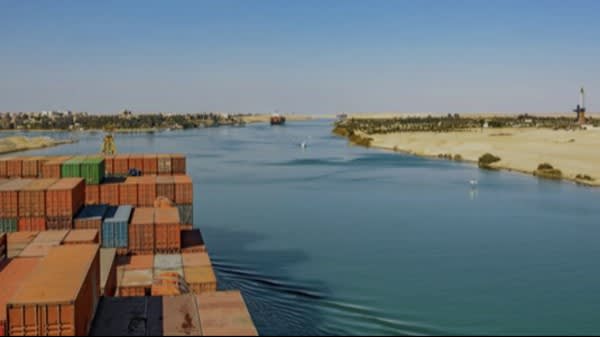
Introduction
Following the agreement of a first-phase ceasefire between Israel and Hamas on 9th October 2025, it is important to reflect on the Suez Canal’s recovery and its global economic impact.
Context
In response to the Israel-Palestine war, Houthi militants responded by raiding, attacking, and seizing cargo ships in the Suez Canal. Based on reports from Al Jazeera, the Houthis continued to ambush and disturb trade along the Suez Canal until the Israeli offensive in Gaza stopped. Responding to this, the US and UK launched a joint special military operation (11th-12th January 2024), with missile strikes on Houthi rebels across Yemen, with a reported number of 60 targets being hit, so far. This forced cargo ships to stop crossing the Suez Canal and reroute their journeys along the South African coast, resulting in significant delays and disrupting logistics and the global economy.
Critical economic issues
12 major shipping companies stopped their cargo ships from crossing the Suez Canal. To put this into perspective, in 2021, the “Ever Given” cargo ship was trapped in the Suez Canal for 6 days, causing delays of $10 billion per day. 30% of all cargo ship traffic passes through the Suez Canal, as it is one of the most important trade routes in the world, connecting Asia and Europe. Rerouting shipping journeys along the South African coast resulted in a 10-day delivery delay because ships had to travel an extra 13,000km, increasing costs by $ 1 million per journey.
European Countries struggled to acquire natural resources such as crude, fuel and ore,s which would have been imported via the Suez Canal. With the ban on Russian imports, suppliers of such materials became rare and expensive. US inflation rose to 3.4% due to the Suez Canal Crisis, which led to a 1.3% decline in global trade. 17,000 ships cross the Suez Canal carrying around $1 trillion worth of goods per year. This number was drastically reduced by the end of 2024. Therefore, the prices of imported goods such as food, electronics, furniture, and clothing increased due to reduced canal operations.
Increased fuel usage led to environmental damage, caused by pollution. Currently, the shipping industry is responsible for 2-3 % of global CO2 emissions. This number increased exponentially following the Red Sea shipping crisis. In normal conditions, via the Suez Canal, a container vessel carrying 150,000 metric tonnes of cargo from ports in Southern China, such as Shanghai, to Rotterdam, the Netherlands, will produce 41,000 tonnes of CO2. However, due to the diversion, emissions reached an estimated 55,000 tonnes per journey, causing severe environmental damage. Tourist agencies suffered financial losses. For example, MSC Cruises, the third-largest cruise company in the world, cancelled 3 cruises ranging from 21 to 24 days.
Legal Team’s Involvement
The legal sector continues to play a critical role in addressing the commercial and contractual repercussions of the Suez Canal crisis. Law firms are actively involved in interpreting insurance clauses, managing liability disputes, and advising on risk mitigation for future operations.
Key areas of legal focus include:
- Cargo Damage and Force Majeure: Law firms are managing compensation claims arising from cargo damage and interpreting force majeure clauses invoked by companies seeking to enforce or defend claims related to disrupted supply chains.
- War Risk and Insurance Claims: Legal teams are advising on the scope of war risk clauses and assisting clients in processing insurance claims covering both hull and machinery losses. The marine insurance market has faced ongoing uncertainty amid an influx of complex, overlapping legal claims.
- Hull & Machinery (H&M) Insurers: H&M insurers are handling claims from vessels damaged during the Suez Canal crisis, with legal teams reviewing coverage terms, liability allocation, and policy interpretation issues.
- Third-Party and Infrastructure Claims: The Suez Canal Authority has initiated third-party claims for damage to canal infrastructure and obstruction caused by vessels belonging to various shipping companies. Law firms are representing shipowners and insurers in negotiations and settlement proceedings.
- General Average Contributions: Under the General Average principle, losses incurred from damaged cargo aboard an affected vessel are distributed proportionately among all cargo owners. Legal advisers are facilitating these assessments to ensure equitable cost-sharing and compliance with maritime conventions.
Future Outlook
Although a ceasefire has been declared, shipping companies continue to evaluate the long-term risks of transiting through the Suez Canal. Future contractual amendments are expected to include higher insurance premiums, revised voyage orders, and expanded supply chain risk consultancy to address evolving geopolitical uncertainties.
Under international maritime law, the Suez Canal Crisis is violating fundamental freedoms of trade and protection from war established under Article 1 of the Constantinople Convention. Following a resolution of this conflict, an international court must convene to analyse and determine statutory breaches, as well as the appropriate compensation to be imposed on those found liable. It remains to be seen if the perpetrators will be held accountable for their crimes, including possible financial sanctions on Israel and Yemen for destabilising international trade.