
Introduction
Faced with a potential energy crisis driven by conflict in the Middle East and the global shift towards green energy, Western European ports are adapting rapidly. The question is whether Europe's leading shipping hubs can build the infrastructure needed to improve efficiency and compete with their Asian and American counterparts.
Breakdown
Insights from BS Group's Power Compliance seminar and DNV's Maritime Energy Transition Summit show that major infrastructure changes lie ahead. Within Western Europe, the three largest ports are Rotterdam, Antwerp‑Bruges and Hamburg.
Hamburg is Europe's first port to offer shore power for container and cruise ships. Targeting climate neutrality by 2040, it has already achieved a 42% reduction in CO₂ emissions compared with its 2018 baseline. Its Onshore Power Supply (OPS) project allows vessels to switch off diesel engines and connect to the city's electricity grid, with further electrification and fast‑charging infrastructure planned between 2026 and 2030.
Antwerp‑Bruges, the second‑largest Western European port, aims to become climate‑neutral by 2050 and reduce CO₂ emissions by 100,000 tonnes. It has invested in 130 wind turbines across Antwerp and Zeebrugge, alongside the Kallo solar park — Europe's first concentrated solar technology project. The port has also developed a green fleet using alternative fuels, including hydrogen.
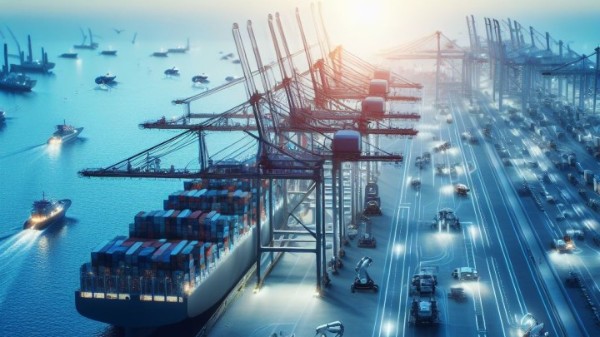
The Port of Rotterdam, Europe's largest logistics hub, aims to accommodate autonomous ships by 2030. At Maasvlakte 2, autonomous cranes and remotely operated trucks already improve efficiency and reduce errors. Its deep‑water berths can handle the world's largest container ships, reinforcing its position as a global freight centre.
Economic Impact
These ports handle 74% of EU goods, making them vital to Western Europe's economy. The Strait of Hormuz crisis has highlighted fossil fuel dependency and accelerated maritime decarbonisation.
Hamburg, Europe's largest rail port, handled 114.6 million tonnes of cargo in 2025. Antwerp-Bruges, which moves approximately 290 million tonnes annually, handles over three million vehicles and contributes 4.5% to Belgium's GDP. Rotterdam, which spans 12,500 hectares (including over 6,000 hectares of industrial sites), handles approximately 469 million tonnes annually, contributes €23.3 billion (2.2% of Dutch GDP), and connects over 1,000 ports worldwide.
Despite Rotterdam's Geographic Information System (GIS) and predictive analytics, fully autonomous operations remain challenging due to weather, visibility, infrastructure, wind conditions, and the need to manage large volumes of dynamic data. These risks, combined with expensive alternative fuels, could affect competitiveness.
Although the IMO delayed adopting its Net Zero Framework, European ports have accelerated decarbonisation through LNG, ammonia, hydrogen and methanol. However, alternative fuels represent only 9.6% of global shipping fuel capacity. LNG requires increased production, ammonia requires stricter safety standards, hydrogen faces storage and flammability challenges, and methanol remains costly.
Legal Impact
Regulation must evolve alongside decarbonisation. The IMO faces opposition to its Net Zero Framework, while the EU ETS, FuelEU Maritime and Energy Taxation Directive encourage shore-power adoption and emissions reductions. Without a coordinated IMO framework, regulation risks fragmentation. Law firms should prioritise facilitating regulatory compliance while supporting the structuring of project investments and drafting the commercial contracts required for new energy infrastructure.
Future Outlook
Collaboration will determine the success of Western Europe's energy transition. By standardising processes, reducing risks and investing in infrastructure, ports can remain compliant, competitive and resilient in an unpredictable energy market.